Regional cable programs scaled
Early SDH and SONET routes demanded repeatable copper and optical cable production with disciplined QA records.
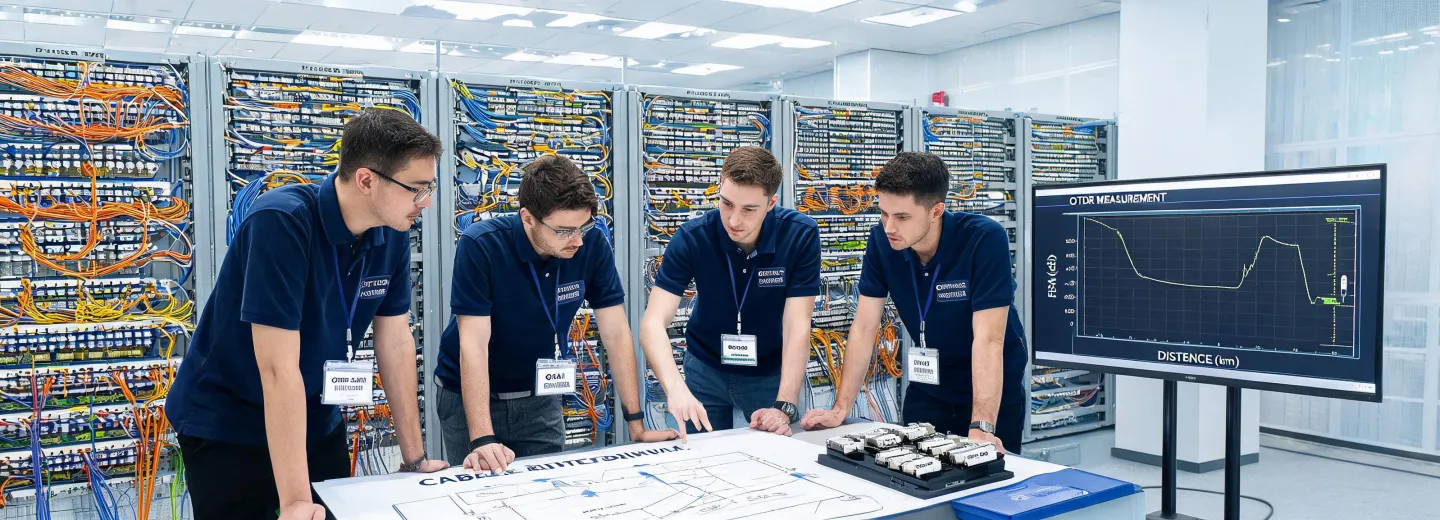
Our identity is practical reliability. We help network owners turn long cable routes, cabinet builds, tower compounds, riser shafts, and submarine paths into documented infrastructure that operations teams can maintain. That work has changed as networks moved from 2.5G SDH protection rings to 10G and 100G coherent transport, then toward 5G NR fronthaul, 400G ZR+ interconnect, and early 1.6T planning. The constant has been cable behavior under real conditions: attenuation, bend radius, flame rating, armor, repair access, and the closeout evidence a NOC needs during an incident.
Early SDH and SONET routes demanded repeatable copper and optical cable production with disciplined QA records.
Outside-plant teams shifted toward higher fiber counts, splitter planning, and installation practices that preserved ITU-T G.652/G.657 performance.
10G/100G coherent routes and dense datacenter fabrics made bend radius, connector cleaning, and traceability more visible to operations teams.
Modern programs connect 5G NR, DWDM, SRv6 core upgrades, and power resilience into one cable planning conversation.
Specifications, acceptance evidence, and field notes stay connected so future maintenance does not depend on memory.
Teams map cable requirements to ITU-T, IEC, TIA, Telcordia, CPR, RoHS, and regional installation expectations.
Advice is written for installers, NOC engineers, and procurement teams who must solve actual rollout constraints.
Prysmian's support model brings optical engineers, outside-plant specialists, NOC coordinators, compliance reviewers, and commercial program managers into the same operating rhythm. The mix matters because a cable decision rarely affects only one team. A jacket choice can change installation timing; a connector choice can change inventory; a trace requirement can change handoff; a repair plan can change how quickly revenue service is restored.
Reviews span length, wavelength, connector count, and dB margin.
Aligns outage windows, escalation rules, and closeout evidence.
Maps documentation to IEC, ITU-T, TIA, CPR, RoHS, and customer acceptance requirements.
Protects practical installation details such as pulling tension, bend radius, sealing, and labeling.
A short review can expose loss-budget, jacket, and documentation risks while there is still time to choose a cleaner cable path.
Schedule Network Architect Call