The Cable Quote That Cost Me $12,000
If you're choosing a cable supplier based on the lowest quote, you're probably going to pay more in the end. I've watched that lesson repeat itself enough times that I don't need a spreadsheet to know it's true.
I coordinate emergency fulfillment for a mid-sized telecom infrastructure contractor. My job is simple: when a project stalls because a cable didn't arrive, got terminated wrong, or wasn't what the spec sheet promised — I get the call. I've handled 200+ rush orders over six years, including same-day turnarounds for data center clients. When the clock is running and you're burning $8,000 a day in crew standby costs, you stop caring about marketing copy. You care about what the supplier can prove.
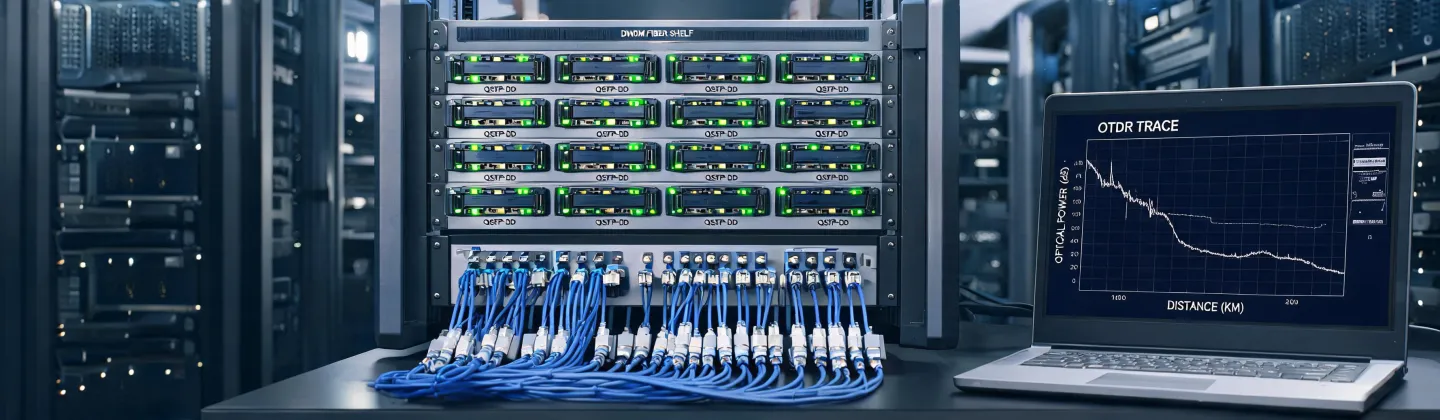
I only learned that after ignoring it. Back in 2022, we went with a no-name distributor on a fiber order because the quote came in 18% lower than what Prysmian's authorized channel was showing us. They warned me about undocumented attenuation specs. I didn't listen. Three reels failed OTDR testing on site, we ate $12,000 in rework and a missed milestone, and that project's margin disappeared. Since then, my team's policy has been straightforward: the most expensive cable is the one you can't fully trace.
This is my honest take on Prysmian — not a sales pitch, since I don't work for them — and why I keep coming back to their catalog when the stakes are high.
What "Prysmian Cables and Systems USA LLC" Actually Refers To
A lot of buyers encounter Prysmian for the first time on a submittal sheet and assume they're dealing with a single factory. They're not.
Prysmian Group is headquartered in Milan, but Prysmian Cables and Systems USA LLC is the operating entity that most North American contractors actually transact with. It sits underneath a global structure that, as of early 2025, runs manufacturing across dozens of sites in North America, Europe, Latin America, and Asia-Pacific. In the US alone, you're looking at facilities in places ranging from South Carolina to Arizona to New York — each with different product specialties.
Why does this matter for a procurement decision? Because vertical integration changes your risk profile. When the copper rod, the insulation compound, and the final extrusion all happen inside the same corporate structure, you get traceability. If something goes wrong, there's a paper trail. That's not true when you buy from a broker sourcing from three unknown factories.
The Prescott, Arizona Factor
I want to be specific about Prysmian Prescott because it comes up in almost every serious conversation about US-based cable supply.
The Prescott, AZ facility is a domestic manufacturing site, and for anyone managing deadlines, that's not a marketing detail — it's a logistical one. Domestic production means shorter lead times, no ocean freight risk, and no customs variables. In 2024 alone, we had two port delays on imported cable that pushed installations by 11 and 19 days respectively. Customers don't want to hear about container backlogs. They want copper on the reel.
Prysmian Prescott specifically handles a range of low-voltage and specialty products that feed into building infrastructure and industrial applications. If you're a contractor working west of the Mississippi, that geographic position is probably the single biggest practical advantage of the Prysmian network.
I'll caveat this: I can only speak to our own experience, which is mid-volume telecom and data work. If you're dealing with utility-scale transmission or offshore wind, the calculus is completely different and Prescott isn't the relevant facility.
N93 and the Fire Alarm Reality Check
Prysmian's fire alarm cable line is where I see the widest gap between buyer expectations and reality.
When someone specifies N93 (or any of the fire-rated low-voltage cable families in the Prysmian catalog), they're often doing it because a spec template said so, not because they fully understand what they're buying. N93-class fire alarm cables are engineered to maintain circuit integrity under fire conditions for a specified duration — and that rating only holds if the installation matches the listing. Bend radius, support spacing, and jacket striping all matter. I've seen crews install it correctly and crews install it "close enough," and the difference is only visible during a fire marshall's inspection.
This is where transparency in manufacturing actually pays off. When a manufacturer publishes the UL listing details, the temperature ratings, and the specific test standards the cable was qualified against, your engineer can verify compliance without guesswork. When a supplier hands you a spec sheet with vague language like "meets applicable codes," that's a red flag. It usually means they're aggregating from a third-party source they can't audit.
I've learned to ask "what's NOT included in this spec" before I ask "what's the price." Nine times out of ten, the cheaper quote answers that question with silence.
The Real Support Question Nobody Wants to Ask
Here's a thing about this industry that doesn't fit cleanly into a product overview: field support is often mediocre across the board.
Last month a field supervisor called me at 11 PM. His team was mid-termination on a fiber run and their calibration handset kept dropping the pairing. Before we could even diagnose the cable issue, he spent 20 minutes trying to remember how do you reset a phone that's frozen mid-configuration — the same handset he uses for diagnostics. Not a supplier problem, but it's the kind of unglamorous downtime that eats project hours. The point is: when you're evaluating suppliers, don't just look at the cable. Look at whether there's real technical support behind it at 11 PM on a Tuesday.
Prysmian's tech support isn't flawless — I've waited on hold like everyone else — but they have application engineers who can actually talk about voltage drop and derating factors. That's different from a distributor reading from a PDF.
"But Prysmian Isn't the Cheapest Option"
Correct. It usually isn't.
If your only criterion is unit price per foot on a standard THHN run, you can absolutely find cheaper cable. I'm not going to pretend otherwise. For commodity applications with forgiving specs and slack deadlines, cheaper can work fine.
But three things change the math:
- Submittal risk. When a spec calls out a specific manufacturer by name and you substitute, you're adding weeks to the approval cycle. Time is money.
- Failure cost. A $3,000 savings on cable is offset by a single failed inspection or a single re-pull.
- Resale and warranty. Documented, traceable product holds value if the project is ever audited, modified, or resold.
After three years and roughly 150 orders, I've come to believe that vendor relationships and documentation matter more than vendor capabilities. Two suppliers can quote you identical specs and deliver completely different reliability.
What I Actually Recommend
If you're building out a low-voltage or fire alarm scope and Prysmian is one of the specified manufacturers, don't fight it. Get the quote from an authorized channel, verify the UL and listing documentation matches your jurisdiction's adoption of the NEC, and move on. The premium you pay buys you a paper trail, and the paper trail is what saves you when a project goes sideways.
If you're in a strictly commodity application with flexible specs, shop around. That's honest advice.
The bottom line: transparent sourcing isn't the same as expensive sourcing — but it's rarely the cheapest, and that's usually the point. A manufacturer that shows you exactly what's in the jacket, exactly which standard it's qualified to, and exactly where it was made is telling you something a discount quote never does. I'll pay a premium for that every time.
Just know what you're buying before the reels show up on site. Once they're there, the conversation changes.