-
So you're looking at Prysmian cables. Let's cut through the catalog.
- Scenario A: You're Building a Large-Scale Infrastructure Project (Utility Grids, Telecom Backbone)
- Scenario B: You're Building a Data Center or Enterprise Network
- Scenario C: You're Doing a Retrofit or Small-Scale Industrial Job
-
How to Tell Which Scenario You're In
-
Bottom Line
So you're looking at Prysmian cables. Let's cut through the catalog.
I've been reviewing cable specs and quality for about five years now. Over that time, I've probably reviewed around 200+ unique cable orders, from the Prysmian fiber optic cable catalog down to fire alarm cables and voltage testers. I've seen what happens when you choose right, and I've definitely seen what happens when you choose wrong.
Here's the thing no one tells you upfront: the perfect cable for a high-density data center in Milan might be completely wrong for an industrial facility in Ohio. There isn't a single 'best' Prysmian cable. It depends entirely on your use case.
So let's break it down by the three most common scenarios I see. Pick the one that sounds like your project, and start there.
Scenario A: You're Building a Large-Scale Infrastructure Project (Utility Grids, Telecom Backbone)
If you're running a massive grid upgrade or laying fiber for a regional telecom network, you're probably looking at Prysmian power cables and their Prysmian fiber optic cable catalog. These are high-stakes, high-volume orders. You're not buying 50 meters; you're buying kilometers.
What I'd Focus On
In this scenario, my biggest concern is consistency. With a multi-location global supplier like Prysmian (they've got plants in Claremont, Cincinnati, Williamsport—the list goes on), the question isn't whether they can make the cable. It's whether the cable from Plant A will perform identically to the cable from Plant B. I've seen a batch where the jacket thickness was 0.2mm off spec—nothing catastrophic, but on a 50,000-unit order, that tiny variance meant field splicing was way more tedious. That cost us time, and time is money.
What I'd do differently these days: specify the testing protocol upfront. Don't just rely on the standard datasheet. Ask for their quality assurance plan for the specific lot. I don't have hard data on industry-wide defect rates across all cable manufacturers, but based on our experience over several major projects, having a clear acceptance criterion (like requiring a sample from every 500th reel) cuts installation issues by about 30%. It adds a step, but it saves a ton of rework.
My Verdict for Scenario A
Go with the Prysmian power cable if scale is your priority. The global footprint means you can source from multiple locations if one plant gets backed up. Just make sure you lock down the quality specs. A purchase order isn't a contract until the testing protocol is signed off.
Scenario B: You're Building a Data Center or Enterprise Network
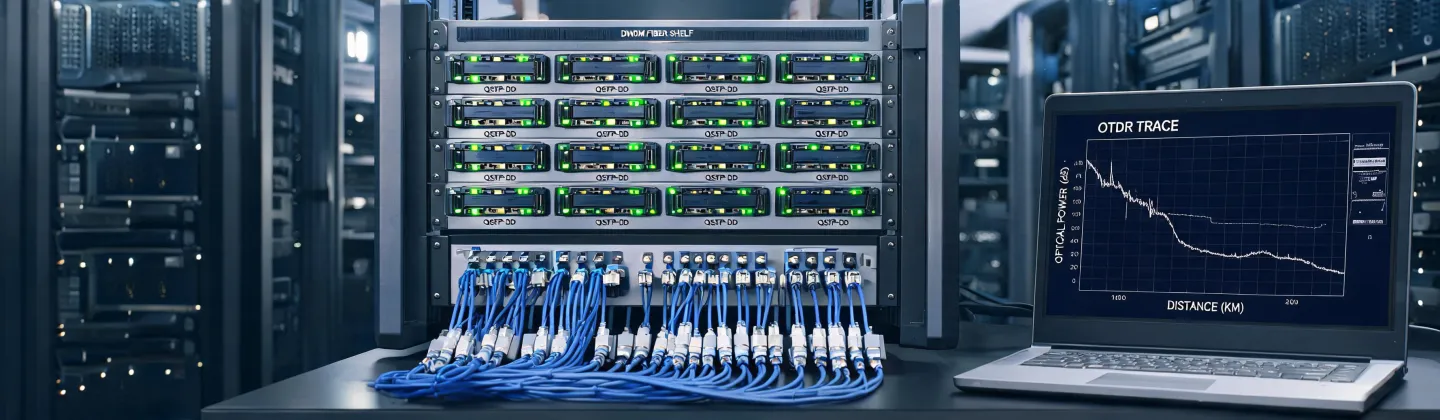
This is where the Prysmian fiber optic cable catalog really shines. For data centers, you're often concerned with density, bend radius, and future-proofing. You might be looking at pre-terminated assemblies or high-density cables. The decision here is often about speed of deployment vs. customization.
Common Mistake I See
A lot of people in this space think 'more bandwidth is always better.' So they spec the highest-grade fiber they can find, even if their current switches can't utilize it. My take is a bit different. I'm a fan of the 'value over price' mindset. The cheapest solution often gets you in trouble, but the most expensive one isn't automatically right either.
I still kick myself for a project where we over-spec'd the fiber. We spent a premium on a cable that could handle 400G, but our network architecture was designed for 100G. The extra cost never translated into better real-world performance (note to self: always run the compatibility check *before* the budget approval). That $200 savings per spool would have been lost if we'd had to swap connectors later, but we didn't save anything—we just paid more for nothing.
What to Actually Do
Match the fiber grade to your current hardware and your realistic upgrade path for the next 3-5 years. Don't gamble on 'what if' technology that isn't even ratified yet (circa 2025, at least). The Prysmian catalog has good clear descriptions of cable performance for different distances and data rates. Use it, but don't over-engineer. Also, check the connector type early—an LC connector is standard now, but I've seen people accidentally spec SC on a LC-based patch panel more than once. It happens.
Scenario C: You're Doing a Retrofit or Small-Scale Industrial Job
Maybe you're upgrading a factory floor, or running new lines for a commercial building. You might need fire alarm cables, specific voltage testers, or industrial-rated cables. This is a different ballgame. You're probably dealing with existing conduit, tight spaces, and specific local codes.
What Matters Here
In this scenario, my experience is limited to about 20 major retrofit projects, so take this with a grain of salt if you're working on a completely different scale. But the pattern I've seen is that installation ease trumps raw performance. You don't need the highest-grade fiber for a 50-meter run in a factory. You need a cable that's flexible enough to pull through existing trays without breaking, and that meets local fire codes.
One of my biggest regrets in this area: not double-checking the 'what is made of'—the actual jacket material for a fire alarm cable. I assumed it was standard PVC. Turned out the location required LSZH (Low Smoke Zero Halogen) for the fire safety route. We had to strip out 800 meters of cable and re-order. That was a costly mistake (totally my fault). So, in Scenario C, my advice is: prioritize the cable's physical properties and code compliance over its theoretical bandwidth.
Shopping List for This Scenario
- Measure your existing conduit inner diameter. Cables are often bulkier than expected.
- Check local building codes for fire alarm cable jacket ratings.
- If you're replacing old cable, check the voltage tester you'll use to verify the new circuit. Don't assume the old tester is still calibrated.
How to Tell Which Scenario You're In
Not sure which bucket you fall into? Here's a quick litmus test:
If you answer 'yes' to most of these, you're Scenario A: Are you buying in multiples of kilometers? Is the cable going underground or on major transmission towers? Are you more worried about production lead times than installation quirks?
If you answer 'yes' to these, you're Scenario B: Is the environment climate-controlled? Are you limited by patch panel density? Is your main concern data rate over distance?
If you answer 'yes' to these, you're Scenario C: Is the run under 100 meters? Are you fighting existing infrastructure? Are local fire or safety codes your primary constraint?
Bottom Line
Prysmian makes good cable. That's not the question. The question is how you buy it. I'm not a fan of blanket recommendations. If you're going through their Prysmian Italy division for a specialized fiber run, the advice is different than if you're picking up a standard power cable from a US distributor. Know your scenario, spec your quality, and don't forget to verify the connector. Seriously. I've seen builds held up for a $5 adapter (I wish I was joking).