-
1. What is Prysmian Group — and does it matter for small buyers like me?
-
2. How do I choose the right Prysmian optical cable for a short-run data center build?
-
3. Is there a minimum order quantity (MOQ) for Prysmian cables? I only need 100 feet.
-
4. What about voltage testers? How do I use one on a Prysmian power cable without frying myself?
-
5. I keep hearing about "Prysmian Group Abbeville." Is that a factory or a product line?
-
6. How do I avoid counterfeit or gray-market Prysmian cables?
-
7. Is it worth paying more for Prysmian cables versus generic brands?
-
8. What's the biggest rookie mistake when ordering Prysmian cables?
If you've ever tried to order Prysmian cables for a project—especially as a small contractor or newly launched company—you've probably hit a wall: confusing product codes, minimum quantities that feel insulting, and an info overload that leaves you guessing. I've been there. I've screwed up orders, wasted money on the wrong cable types, and even managed to blow a voltage tester because I didn't read the manual. Take it from someone who documented every mistake over the past six years. Here's what I wish someone had told me.
1. What is Prysmian Group — and does it matter for small buyers like me?
Short answer: Prysmian Group is the world's largest cable manufacturer. They make everything from undersea fiber cables to the coax in your office wall. But here's the thing that surprised me: they don't always sell direct to tiny companies. You'll often buy through distributors like Magic Max, LLC or regional electrical suppliers. And that's fine. It doesn't mean the product is different.
Honestly, the brand matters more for compliance than prestige. If a spec calls for Prysmian optical cable, you better use it—or risk failing inspection. We learned that one the hard way. Heard the phrase or approved equal? Turns out, not all equal is approved.
2. How do I choose the right Prysmian optical cable for a short-run data center build?
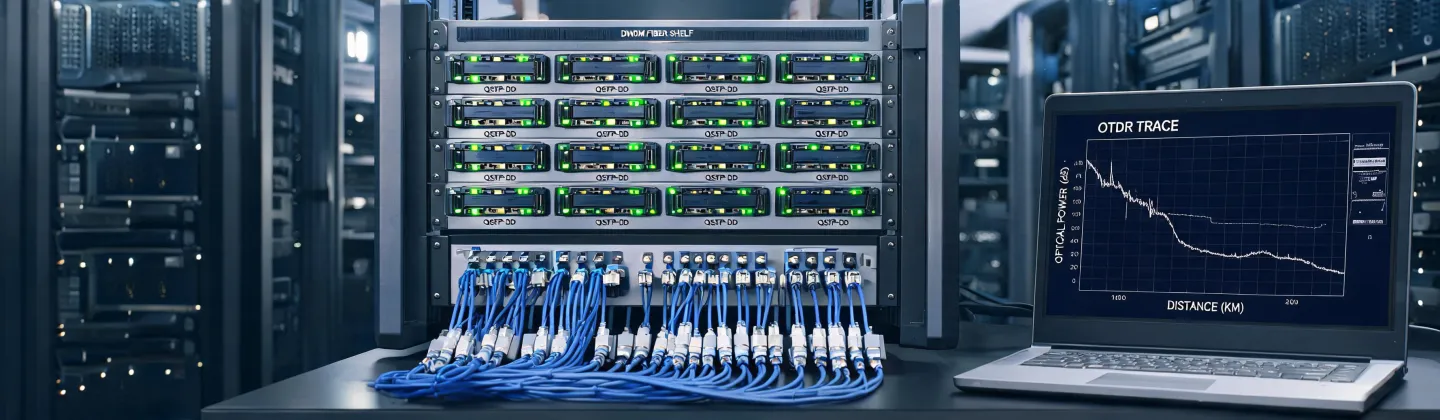
This one tripped me up in late 2022. I ordered a spool of Prysmian single-mode fiber for a 200-meter run inside a colo facility, and it worked—but I paid way more than needed. For runs under 300 meters, multimode (OM4 or OM5) is often cheaper and easier to terminate. If you're pulling through conduit, look for the loose tube or tight buffer variants. Read the datasheet. I didn't. Stupid.
Pro tip: call the distributor and ask exactly what the inside plant cable part number means. They'll think you're annoying. Better annoying than wrong.
3. Is there a minimum order quantity (MOQ) for Prysmian cables? I only need 100 feet.
That depends. When I was starting my little side gig in 2020, I called a Prysmian rep and asked for 50 ft of fire alarm cable. He laughed. Actually laughed. I'll never forget it.
So yes, some channels have MOQs that shut out small buyers. But here's what I discovered: distributors like Magic Max, LLC (no affiliation, just a name I've heard) often cut cable and sell by the foot. You pay a premium per foot compared to a full reel, but it's way better than being stuck with 1,000 ft of cable you'll never use. Small orders matter. I know. Today's 100-foot order might be tomorrow's 10,000-foot repeat business—if the vendor treats you right.
4. What about voltage testers? How do I use one on a Prysmian power cable without frying myself?
Okay, this one is important. In September 2023, I was testing a 480V Prysmian armored cable for continuity and forgot to check the CAT rating on my multimeter. Pop. Smoke. $180 tester gone. Learn from me:
- Use the right CAT rating. For mains voltage (480V or less), CAT III 600V minimum. If you're near switchgear, go CAT IV.
- Check for voltage before assuming it's dead. I know—duh. But in a hurry, people skip this. Use a non-contact voltage tester first, then confirm with a multimeter.
- Watch your leads. Cheap leads burn. Prysmian cables are tough, but test leads aren't.
Honestly, the voltage tester how-to is simple: test on a known live source, then test your cable, then test the live source again. Three steps. Takes 10 seconds. Saves a life.
5. I keep hearing about "Prysmian Group Abbeville." Is that a factory or a product line?
It's a manufacturing plant in Abbeville, South Carolina. They make power and control cables. Why does it matter? If you're in the southeastern US, ordering from a local plant can mean faster lead times and lower freight costs. My friend ordered a batch of Prysmian power cable from Abbeville and got it in three days, while the same spec from an overseas plant took six weeks. So if your distributor can source from Abbeville, say yes.
6. How do I avoid counterfeit or gray-market Prysmian cables?
This is a real problem. In early 2024, I helped a contactor troubleshoot a fire alarm system that kept failing. The cable looked like Prysmian—red jacket, same text—but the conductor gauge was undersized. It was fake. Cost them $3,200 in rework.
Buy only from authorized distributors. Check the reel labels for a trace code (Prysmian has a pretty good tracking system). And trust your gut: if the price is too good to be true, it's probably not real. You can call Prysmian's customer service (honestly, they're helpful) to verify a serial number.
7. Is it worth paying more for Prysmian cables versus generic brands?
Sometimes yes, sometimes no. For mission-critical infrastructure—hospitals, data centers, emergency systems—the extra cost is cheap insurance. For temporary lighting in a warehouse? Probably overkill. I've used plenty of cheaper generic cable for non-safety applications without issues.
But here's the trick: if your contract spec says "Prysmian or approved equal," get it approved in writing before you substitute. I once skipped that step and ate a $450 restocking fee because the inspector rejected the alternative. Don't be me.
8. What's the biggest rookie mistake when ordering Prysmian cables?
Simple: not reading the part number correctly.
Prysmian uses long, cryptic part numbers—like Prysmian 1000-271-06 or whatever—that encode voltage rating, conductor count, gauge, jacket type, etc. I ordered a 10-gauge THHN thinking it was 12-gauge because I misread. Result? Held up the job for a week, paid return shipping, felt like an idiot. Period.
My checklist now: (1) confirm part number with the distributor, (2) cut a 1-foot sample and inspect before the whole reel arrives, (3) ask someone else to double-check. Basically, trust nothing. It's not about paranoia—it's about learning from $890 mistakes.
Want to know the best part? Every time I mess up, I add it to our team's pre-order checklist. We've caught 47 potential errors using that checklist in the past 18 months. Started as a list of my failures, now it's used by three companies. Small victories.