I'm a quality/compliance manager in the wire and cable business. I review roughly 200+ incoming deliveries a year, and I've rejected about 8% of first deliveries in 2024 for spec mismatches. That isn't because I like returning trucks. It's because a wrong cable on a site-wide rollout costs far more than a refused delivery.
People ask me a lot about Prysmian. Usually the questions center on two things that get lumped together: Prysmian Powerlink cables and Prysmian optical fiber. They aren't direct competitors. One carries energy; the other carries light. But they both show up on the same projects, and buyers have to decide where to put their attention. This comparison is for those moments.
The lens I use
When I compare two cable options, I don't compare catalogs. I compare the things that actually fail on site:
- Physical medium and what it's supposed to do
- Failure modes, both obvious and hidden
- Documentation and lot traceability
- Installation risk
- Emergency lead-time behavior
That's the lens here. It applies to a Powerlink feeder or a fiber backbone.
1. Physical medium and job role
Prysmian Powerlink is a power cable system. It's engineered for medium- and high-voltage transmission and distribution: substation feeders, industrial power runs, underground distribution links. The critical characteristics are insulation thickness, conductor continuity, thermal limits, and partial discharge performance.
Prysmian optical fiber is built for communication networks. It uses glass cores, buffers, strength yarns, and jackets to carry light over distance. The metrics that matter are attenuation, bandwidth, bend loss, and cable fire rating.
I've seen a contractor buy a fiber reel because the project spec said "Prysmian cable" and the picture on the distributor's site looked right. The cameras needed power; the fiber carried data. The result was a $22,000 redo and a two-week delay. The cable itself wasn't bad. It was the wrong layer of infrastructure.
Conclusion: the first choice isn't brand. It's function. Powerlink for power, optical fiber for data.
2. Failure modes: loud vs silent
Power cable issues tend to be loud and immediate. You get a tripped breaker, a hot gland, a voltage dip, or visible jacket damage. You know you have a problem quickly.
Fiber issues are silent. A splice with too much loss, a micro-bend in a tray, or dirty connectors can take a network from fine to 'why is this app so slow?' without any physical sign. The cable can pass a basic continuity check and still fail real-world performance.
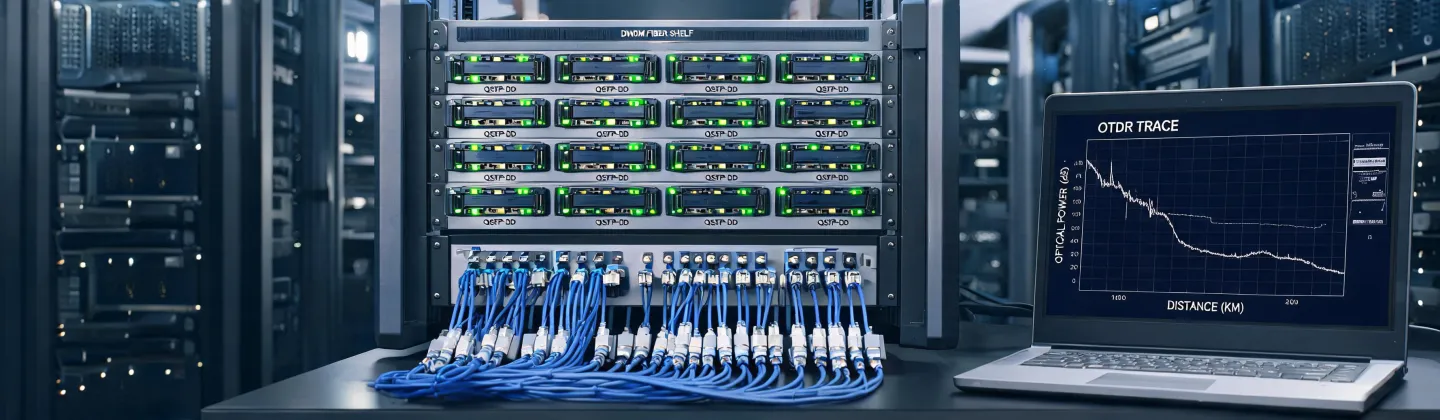
This is why traceability matters. When I was at Prysmian's De Soto, KS facility, I remember one work order ending in 3310—I want to say that was the number, but don't quote me on exact digits. What I remember clearly is the OTDR trace attached to that drum. Every reel had production data tied to the lot number. (Note to self: verify the exact lot-serial convention before writing it into a spec.) That kind of trace turns a fiber fault from 'find the needle in the route' into 'check the lot 3310 trace first.'
Conclusion: power failures are safety and outage events; fiber failures are reliability and performance events. You need separate test plans for both.
3. Documentation: what separates a spec from a story
This is the part of my job that sounds boring until a warranty claim shows up. For Powerlink, I want conductor resistance values, insulation thickness readings, partial discharge reports on medium/high-voltage cables, and lot numbers on every drum. For optical fiber, I want attenuation data by wavelength, tensile test results, jacket rating, and connector loss data if it's pre-terminated.
In my first year, I made the classic mistake: I accepted a certificate of conformance without matching the part number on the certificate to the part number on the cable jacket. It cost me a $600 rework and a very red face in the project meeting. Now I check the label before I check anything else.
And watch the marketing words. Per FTC guidance (ftc.gov/green-guides), if a supplier labels a cable 'recyclable' or 'eco-friendly,' that claim needs to be substantiated. I've seen shipments arrive with green packaging and no environmental data at all. That's a red flag for me.
Conclusion: documentation isn't bureaucracy. It's verification that the cable you got is the cable you specified.
4. Installation risk
Powerlink is heavy. The pulling tensions are high, the bend radii are strict, and splices require certified jointers. If installation crews treat it like a farm lead, it might pass the initial inspection and still fail on first load.
Optical fiber is lighter but easier to damage. Over-tension, tight clamps, crushed reels, or a dirty connector can ruin a link. One particle in a fiber connector can add several dB of loss. That isn't a cable defect; it's an installation and handling defect.
The best electrician isn't automatically the best fiber technician. The best fiber splicer isn't automatically the best cable puller. If your scope includes both, plan for separate crews or cross-train them before the job starts.
Conclusion: installation procedures should be defined by the cable type, not by whoever is available.
5. Emergency lead times: the case for paying for certainty
Here's the opinion that gets me in arguments with purchasing. In an emergency, 'probably on time' is the biggest risk in the room.
In March 2024, I paid an extra $400 for rush delivery of a specific cable length. Missing a $15,000 event was the alternative. I didn't like the fee, but I wasn't really buying speed. I was buying a date the supplier would commit to. The certainty was worth the premium.
I have mixed feelings about rush fees. On one hand, they can feel like gouging. On the other, I've seen what a guaranteed rush order does to a factory schedule—it disrupts the line, reorders priorities, and forces overtime. The fee is the price of that disruption. So I've started budgeting it into deadlines instead of pretending emergencies don't happen.
Conclusion: when a deadline is real, choose the supplier that commits in writing. With Prysmian, that often means going through a distributor with physical stock—maybe the De Soto, KS location or a regional warehouse—rather than hoping for the cheapest logistics option.
6. Testing tools: a good multimeter isn't optional
Now the question people actually search for: What's the best multimeter for electronics work?
For electronics troubleshooting on cable-fed control circuits, I don't use the cheapest meter in the drawer. I use a true RMS meter with LoZ mode, microamp range, and a CAT III or CAT IV rating. That combo prevents ghost-voltage readings and lets me measure small control currents without chasing fake faults.
The best multimeter for electronics isn't always the best meter for plant electrical work, and neither one will test fiber links. For fiber, you need an OLTS or OTDR. For copper terminations on a Powerlink system, a good multimeter plus a megohmmeter covers the first round of verification.
Conclusion: match the tool to the layer. Buy a serious multimeter for the electrical side, and buy proper optical test equipment for the fiber side.
My final recommendation
It depends on what you're building.
- Choose Prysmian Powerlink for electrical power: incoming service, feeders, distribution, or high-voltage transmission. Look at conductor material, voltage rating, insulation, and jointing accessory compatibility.
- Choose Prysmian optical fiber for data and telecom: network backbones, data center interconnect, outside plant, or industrial Ethernet. Look at fiber count, attenuation, bend performance, and jacket fire rating.
Neither is universally better. They're different layers of infrastructure that both need to be right. If there's one thing I've learned from hundreds of inspections, it's this: the brand matters less than verification. A quality inspector's job is to make sure what's delivered matches what was designed—and that's true whether the truck is carrying a Powerlink reel or a fiber drum.